 WhatsApp: +86-13379040254
Welcome to Lingkang Times Biology
 Shaanxi Lingkang Times Biotechnology Co., LTD
WhatsApp: +86-13379040254
Shaanxi Lingkang Times Biotechnology Co., LTD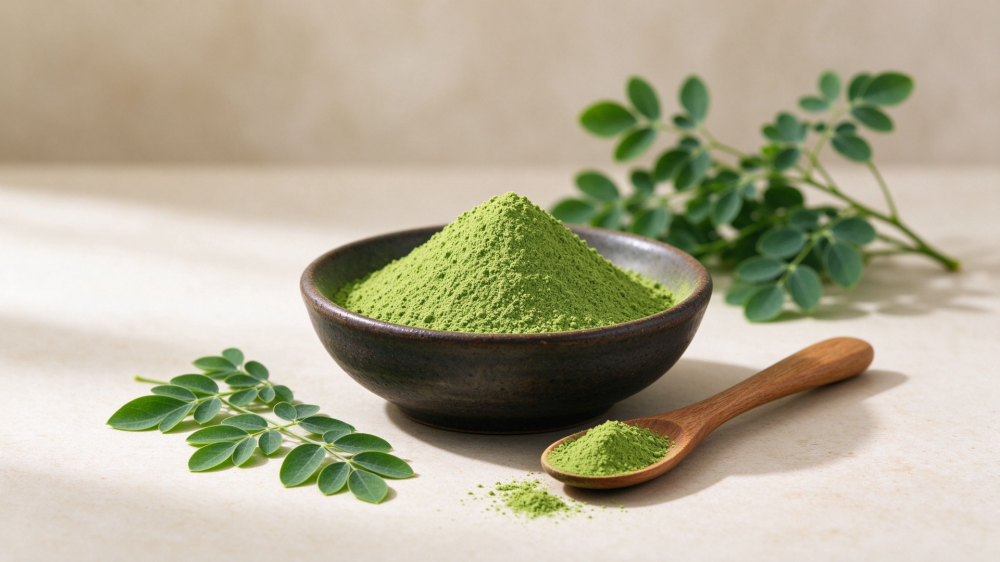 Moringa leaf powder is a botanical ingredient that has been getting a lot of attention from supplement and food brands. The green powder, made from the dried leaves of Moringa oleifera, shows up in tea blends, smoothie mixes, capsules, and a growing number of functional products.
Before you commit to a bulk order, it helps to understand what the material actually is, what it can be used in, and what separates a decent supplier from a mediocre one. This article goes through those points from a purchasing perspective, not a marketing one.
Moringa oleifera is a fast-growing tree native to parts of South Asia. The leaves are picked, cleaned, dried, and ground into a fine powder. That's it — there's no heavy processing involved, which is part of why it fits clean-label lines.
What matters for a buyer is consistency. Two batches of the same-looking green powder can differ noticeably in color, particle size, moisture, and taste, depending on when the leaves were harvested and how they were dried. Those differences show up in your end product, so it's worth checking them from the start.
If you're deciding whether moringa fits your product line, these are the common directions:
Capsules and tablets, where the powder is used as a straightforward botanical ingredient.
Powdered blends — smoothie mixes, protein shakes, tea mixes.
Bars and baked goods, where it also brings green color to the formula.
Herbal tea bags, sometimes blended with other botanicals.
Moringa has a distinct, slightly earthy taste. In some products that's a feature; in others it needs masking. Run a trial batch before scaling up, because flavor is the thing most likely to surprise you.
This is where most of the risk sits. A few things worth confirming before you sign anything:
Raw material source and harvest. Ask where the leaves come from and how fresh they are at intake. Fresher leaves generally mean better color and a cleaner profile.
Processing method. Low-temperature drying preserves color better than high-heat methods. Ask what they use and what particle size the powder is milled to.
Testing. Request the Certificate of Analysis. Check microbial counts, moisture, heavy metals, and any residues relevant to your market.
Documentation. Ask which certificates and export documents they can provide, and confirm they match what your importing country requires. Don't assume — check.
Samples. Get a sample, run it in your own trial, and keep a reference batch. It's the cheapest insurance you'll get.
This comes up early in most conversations. If your target market requires organic moringa, ask whether the supplier holds a certificate that covers your region — organic standards differ between the EU, the US, and other markets, and a certificate that works in one may not cover another. If conventional is fine for your product, you still want the same testing and traceability.
The powder keeps best sealed, away from light and moisture, in a cool dry place. Ask the supplier what they guarantee on shelf life and how they pack bulk orders — drums, bags, or liner bags — because that affects what you receive and how you store it at your end.
There's a practical difference between buying from a manufacturer and buying from a trader. With a manufacturer, you can talk about specification changes, packaging, and documentation with the people who actually control the process. Response times tend to be shorter, and there's less room for details to get lost between parties.
None of that means a manufacturer is automatically the right call for everyone. What it does mean is that you can ask harder questions and expect concrete answers — about drying temperatures, batch records, and test frequency.
Get the sample, check the COA, run your trial, and confirm the paperwork matches your market's requirements. If a supplier hesitates on any of these, that's information.
If you'd like a sample or a current test report, get in touch and we'll send them over. We'll also walk you through what we can do on processing, packaging, and documentation, so you can decide whether we're a fit.