![Shaanxi Lingkang Times Biotechnology Co., LTD]() Shaanxi Lingkang Times Biotechnology Co., LTD
Shaanxi Lingkang Times Biotechnology Co., LTD

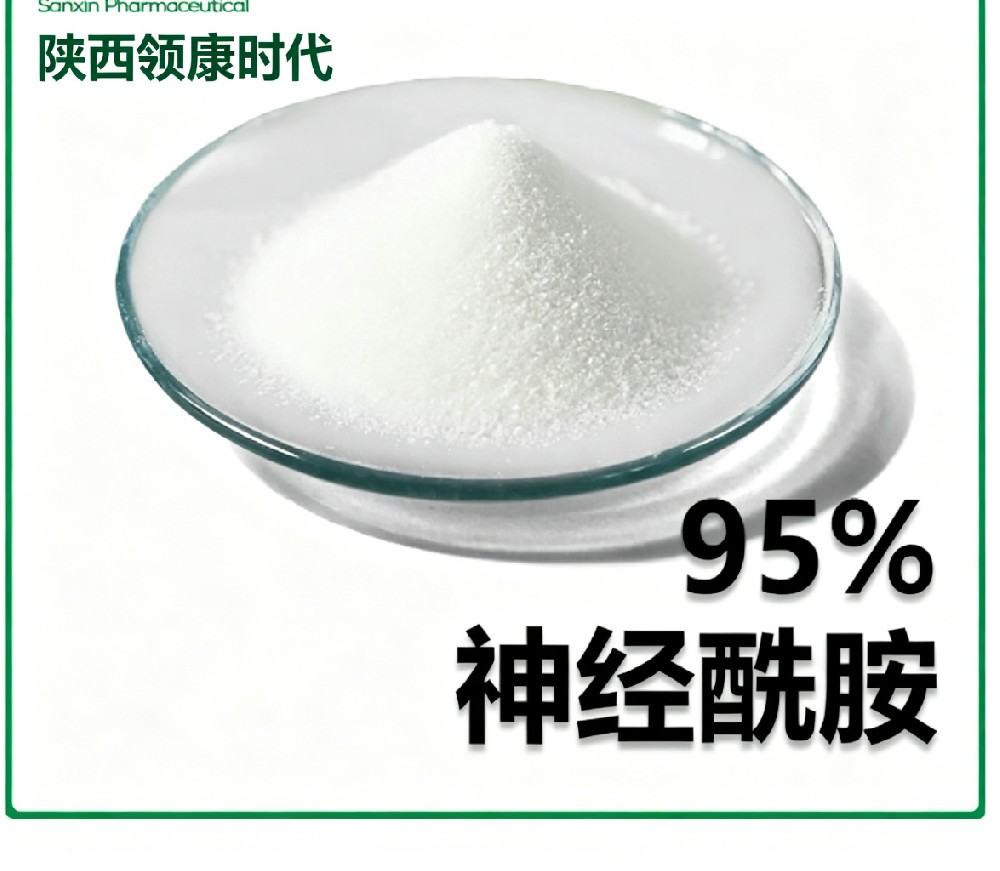
What Is Ceramide?
Ceramides are a family of waxy lipid molecules formed by the amidation of a fatty acid with a sphingoid base. They occur naturally within the intercellular lipid matrix of the stratum corneum, the outermost layer of mammalian skin.
For specification purposes, the key identifiers are:
Parameter | Detail |
INCI Name | Ceramide NP (synonym: Ceramide 3) |
CAS Number | 100403-19-8 |
Molecular Formula | C34H67NO3 (representative) |
Molecular Weight | 537.91 g/mol (representative) |
Appearance | White to off-white powder |
Solubility | Practically insoluble in water; soluble in ethanol and cosmetic oils |
Melting Point | 93–96 °C |
"Ceramide" is not a single molecule. The INCI system distinguishes several subtypes, and the designation on a specification sheet tells you exactly which one you are buying.
Ceramide Type | INCI Name | CAS Number |
Ceramide NP | Ceramide NP | 100403-19-8 |
Ceramide AP | Ceramide AP | 34354-88-6 |
Ceramide EOP | Ceramide EOP | 100403-19-8 |
Ceramide NS | Ceramide NS | 100403-19-8 |
Note: commercial ceramide powder is frequently a blend of several subtypes. When requesting a quotation, ask for the subtype breakdown rather than the total ceramide content alone — the distinction matters for formulation and for label declaration.
Three production routes dominate commercial supply. Each carries a different cost structure and quality profile, but the route alone is not a quality guarantee — process control is.
Sphingolipid-producing yeast or bacteria are cultured under controlled conditions, after which the ceramide is extracted and purified. This route typically delivers the highest purity grades and the most consistent stereochemical composition. Cost per kilogram is the highest of the three.
Rice bran — the outer layer removed during rice milling — contains naturally occurring sphingolipids. These are extracted, hydrolysed and purified into ceramide. This is the most widely supplied route for cosmetic grades, offering a practical balance between purity and cost. It is also the route most Chinese extraction manufacturers specialise in.
The target molecule is assembled through chemical reaction rather than a biological process. Purity is controllable, but stereochemical composition may differ from bio-derived material.
Route | Typical Purity Range | Relative Cost | Notes |
Microbial fermentation | 95%+ | High | Highest stereochemical consistency |
Plant extraction (rice bran) | 1%–98% | Medium | Most common cosmetic-grade supply |
Chemical synthesis | Variable | Low | Cost-effective at high volume |
Ceramide is supplied either as a diluted powder (for direct formulation) or as a high-purity concentrate.
Grade | Ceramide Content | Form | Typical Application |
Water-soluble 1% | 1% | Powder | Cold-process formulations |
Water-soluble 5% | 5% | Powder | Cold-process formulations |
Standard 10% | 10% | Powder | General formulation |
High-purity 98% | 98% | Powder | Concentrate for in-house dilution |
Water-soluble grades are produced by dispersing ceramide onto a carrier system. Confirm the carrier composition before ordering — it varies between suppliers and can affect your formulation and your label declaration.
Typical specification ranges for rice bran-derived ceramide:
Parameter | Specification |
Appearance | White to off-white fine powder |
Assay (as ceramide) | 1% / 5% / 10% / 98% (as ordered) |
Loss on drying | ≤ 10.0% |
Ash | ≤ 5.0% |
Particle size | 80 mesh (≥ 95% pass) |
Bulk density | 0.40–0.70 g/mL |
Heavy metals (as Pb) | ≤ 20 ppm |
Arsenic (As) | ≤ 2 ppm |
Lead (Pb) | ≤ 2 ppm |
Mercury (Hg) | ≤ 1 ppm |
Total plate count | < 5,000 CFU/g |
Yeast & mould | < 500 CFU/g |
E. coli | Not detected |
Salmonella | Not detected |
These are typical ranges. Always request the batch-specific Certificate of Analysis (COA) before confirming a purchase order.
Test | Method |
Ceramide assay | HPLC |
Heavy metals | ICP-MS or AAS |
Microbiological | USP <61> / <62> |
Loss on drying | Gravimetric, 105 °C |
Ash | Gravimetric, 550 °C |
Identification | IR or HPLC retention time |
Five points worth checking before you approve a supplier:
Assay method. "98%" means little without the test method. HPLC-quantified ceramide content is the industry standard — confirm the method on the COA.
Subtype breakdown. A total ceramide figure can hide a poorly defined mixture. Ask which subtypes are present and at what ratio.
Carrier disclosure (water-soluble grades). The carrier is part of your formulation. If the supplier treats it as confidential, ask for the INCI names at minimum.
Heavy metal limits. Compare against your destination market's requirements. Limits that satisfy one market may not satisfy another.
Batch-to-batch consistency. Request COAs from three separate batches. Consistency across batches is a better quality signal than a single impressive result.
Market | Status |
China (IECIC) | Listed in the Inventory of Existing Cosmetic Ingredients in China |
China — cosmetic filing | Ingredient filing code available on request |
EU | Compliant with Regulation (EC) No 1223/2009 |
USA | Not prohibited; INCI declaration required on finished product labels |
Documentation available on request: COA, MSDS, technical specification sheet, and — for Chinese customers — the cosmetic ingredient filing code.
Item | Detail |
Inner packaging | Double-layer food-grade PE bag |
Outer packaging | 25 kg fibre drum |
Sample packaging | 100 g / 1 kg foil bag |
Storage | Sealed, protected from light, dry conditions below 25 °C |
Shelf life | 24 months in unopened original packaging |
Item | Detail |
Minimum order quantity | 1 kg (samples from 100 g) |
Custom grades | Available on request — assay level, particle size, packaging |
Lead time | In stock: 3–5 working days · Custom: 10–15 working days |
Shipping terms | EXW / FOB / CIF |
Port of departure | Qingdao / Shanghai / Tianjin |
Payment terms | T/T, L/C at sight |
What is the difference between 1% and 98% ceramide?The 1% grade is a pre-diluted powder intended for direct addition to a formulation. The 98% grade is a concentrate that you dilute in-house. The choice depends on your production capability and your order volume.
Is rice bran ceramide plant-derived?Yes. It is extracted from rice bran, a by-product of rice milling.
Can you supply a sample?Samples from 100 g are available. Send your target grade and intended application when you enquire.
Which documents do you provide?COA per batch, MSDS, technical specification sheet, and — for Chinese customers — the cosmetic ingredient filing code.
Do you support custom specifications?Yes, including assay level, particle size, carrier system and packaging configuration.
What is the shelf life and how should it be stored?24 months in unopened original packaging. Store sealed, protected from light, in dry conditions below 25 °C.
Shaanxi Lingkang Era Biotechnology Co., Ltd. is a plant extraction manufacturer based in Shaanxi Province, China. We produce botanical extract ingredients — including rice bran-derived ceramide across grades from 1% to 98% — for cosmetic and personal care customers worldwide.
For technical specifications, samples or a quotation, contact our sales team.